

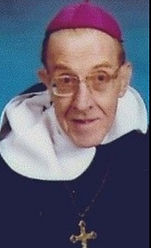

Sermon by priest Tobias Bayer
- Why do we belive ?
In the name of the Father and of the Son and of the Holy Ghost. Amen.
And this is the victory which overcometh the world: our faith.
I want to emphasize today the Catholic notion of faith and the motive for believing - the motive for faith. What do I mean by motive? By motive I mean the reason or authority by which something is believed - that is, why we believe something. What do we hope for in return for believing? The reward is happiness or eternal life. How do we attain this? Through faith. But not just any faith - it has to be through supernatural faith. So then, what is the Catholic notion of faith? In the broad sense, faith is a firm assent of the intellect (meaning that it is in the mind, with nothing to do with feelings or our own crazy ideas). It is our mind adhering to a cold fact that is given to it. An assent to what? To some truth. Why do we assent? Because of the authority or testimony of the speaker.

Priest Tobias Bayer.
Authority involves two things: truthfulness and a sufficient knowledge in order to teach. We believe a teacher or a witness if he has both of these qualities - if he speaks the truth and knows what he is talking about.
Now, there are two kinds of faith. On the one hand, human faith is that which assents to some truth because of human authority. And so we believe history and that Julius Caesar existed. On the other hand, divine faith is that which assents to truth revealed by God because of the testimony of God revealing. This is how human faith and divine faith differ.
Why do we assent to supernatural faith? Saint John provides the answer in today’s epistle when he says: “If we receive the testimony of men, the testimony of God is greater. If we give credit to man’s testimony, we ought to believe so much more God witnessing concerning Christ.”
God’s testimony is greater both in dignity and authority, in truth and certainty. God is supreme truth who cannot lie, who cannot deceive nor be deceived. God created everything and knows absolutely everything. And it is because God is infallible and knows all things that He is perfectly truthful and only speaks the truth to us. Therefore everything that God reveals to us as truths to be believed is worthy of our most firm faith.
The motive for our supernatural faith is God and God alone - precisely because it is Him who commands our belief. In other words, it is impossible that God, who is first truth itself, says something false, just as it is impossible that goodness itself do something evil.
Moreover, the testimony of the Church, of the apostles and prophets, is the testimony of God, for the Church is governed by the Holy Ghost, who is the Spirit of Truth. This is exactly what the Vatican Council in 1870 defined when it taught that the virtue of faith is a supernatural virtue by which we believe truth revealed by God because of the authority of God revealing.
No man can reasonably doubt that faith thus understood is necessary for salvation. St.Paul insists on this point when he says: “Without faith it is impossible to please God.” For it was necessary that God make known to man the reward of heaven and perfect happiness there - precisely because human reason by itself cannot rise to the understanding of his ultimate beatitude. And if we do not know what our ultimate beatitude and eternal reward consists of, how can we attain it or why even make the effort to live the faith? We can neither seek nor pursue what we do not know.
The beatitude of man according to Catholic doctrine does not consist in external created things-these would be such as health, beauty, money and the like. Such things are uncertain and unstable, they do not fulfill the desires of man and in the end are subordinated and ordered to the goods of the soul. Likewise, the beatitude of man does not consist in internal created goods of body or of soul-those would be intelligence, talents and the like. They are still finite and limited things and are ordered to something else besides the soul. In the end, only God is absolutely perf+ect and perfectly fulfills the will of man. Thus the true and complete beatitude of man consists only in God.
But the knowledge of our purpose and creation and of our perfect happiness to be received in heaven is given to us by God. This is nothing else than faith. And by this faith we assent to whatever God teaches us, to whatever the Church teaches us to have been revealed by God. For we cannot doubt those things of which God is the author.
We said before how faith is a supernatural virtue. How do we attain it then? If faith is a supernatural virtue, then we require a supernatural grace from God granting it to us. The supernatural order is above the natural order and therefore supernatural faith is completely above and beyond the powers of human nature. In other words, the supernatural exceeds all the powers of human nature. We cannot cross over from the natural order into the supernatural order on our own steam.
How then are we ever to learn and believe the supernatural truths revealed to us by God? Our human and natural understanding is lacking and deficient here. That is why God has to elevate our souls to bridge the gap between the natural and the supernatural. And God does so by a special supernatural grace which He freely gives to us.
We can know what must be believed from the authority of teachers like our parents and the catechism. But knowing what must be believed is not enough for a supernatural reward in eternity. We will only believe with a supernatural faith meritorious of eternal life and happiness through the help of a special grace of God.
The Vatican Council teaches exactly this when it says that no one can consent to the preaching of the gospel without the illumination of the Holy Ghost who gives to all sweetness in consenting to and believing the faith. God gives joy and sweetness to the soul who adheres to Him through supernatural faith. Is not our eternal beatitude and happiness found in God Himself? Yet even in this life God will anticipate the reward and will give us a sweet complacency when living in His grace with spiritual and even sensible consolations.
It is impossible to consent to God’s revelation without being motivated to do so by His authority. Why do we believe the articles of faith? We believe not because our mother told us so. No. We believe because it is God who teaches us so. God Himself has to show Himself to us, show us the way to reach Him and show us how and why we should reach Him.
In conclusion, we must pray to God that He grant us the necessary grace to have supernatural and perfect faith - the one necessary and meritorious for reaching eternal beatitude. Catholics believe because it is God who teaches. We must seek and pray for a true and complete supernatural faith precisely because it is revealed by God and proposed to us by the Church for belief as coming from Him.
As Saint Bernard wisely says: “Faith reaches things inaccessible, discovers the unknown, comprehends the infinite, seizes the remotest bounds of things and in short embraces eternity itself.”
In the name of the Father and the Son and the Holy Ghost. Amen.

